Water Damaged Drywall Replacement Cost:
$300 to $1,500 (or More for Whole Rooms)
Water-damaged drywall always requires replacement, never patching. The pricing is driven by the extent of the wet area, the dry-out time required before re-hanging, mould protocol, and whether insurance is paying. Here is the honest scope, the moisture meter and mould threshold rules, and the contractor tier dynamics.
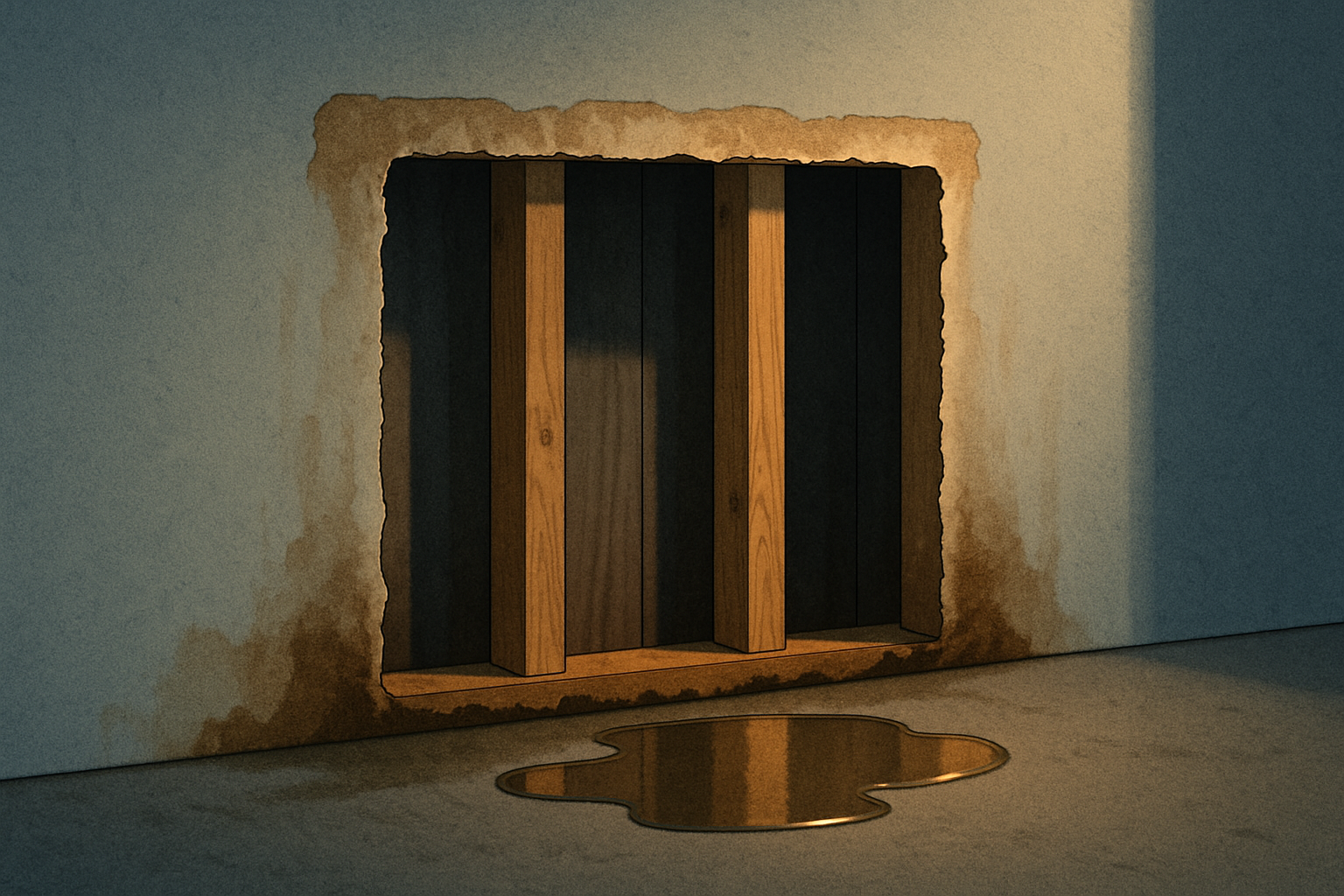
Why Wet Drywall Always Needs Replacement
Standard drywall is made of gypsum sandwiched between paper layers. When the paper absorbs water, two things happen. First, the paper softens and loses structural integrity, eventually peeling and crumbling. Second, the wet paper becomes a substrate for mould growth, which begins within 24 to 48 hours of wetting and accelerates rapidly in humid conditions.
Patching over wet drywall traps moisture behind the new surface and accelerates mould rather than stopping it. The mould then spreads laterally within the wall cavity, eventually emerging in adjacent areas as visible black spotting or as a musty odor that homeowners notice 3 to 6 months after the original incident. By that point, the remediation scope has grown from a single wet wall to multiple walls and potentially framing damage.
The correct protocol is documented by the IICRC S500 Standard for Professional Water Damage Restoration: identify and stop the water source, document with photos and moisture readings, cut out the wet drywall (typically 12 to 24 inches above the visible water line, plus 18 inches in each lateral direction to ensure all wet material is removed), dry the framing to below 15 percent moisture content using dehumidifiers and air movers, treat exposed framing with antimicrobial if appropriate, then re-hang and finish new drywall.
Cost Breakdown by Scope
| Scope | Drywall area | Cost (without mould) | Cost (with mould remediation) |
|---|---|---|---|
| Small section (small leak, single wall) | ~20 sqft | $300 to $600 | $800 to $1,500 |
| Medium zone (appliance overflow, plumbing burst) | ~50 sqft | $700 to $1,200 | $1,800 to $3,500 |
| Larger zone (storm damage, multiple walls) | ~120 sqft | $1,400 to $2,500 | $3,500 to $6,500 |
| Whole room (flooded basement, ceiling collapse) | ~500 sqft | $2,500 to $5,000 | $5,000 to $12,000 |
| Whole-house flood (Cat 3 water) | 2,000+ sqft | $10,000 to $25,000 | $25,000 to $60,000 |
The "with mould remediation" column applies when visible mould is found during demolition. The remediation work is performed by a licensed mould remediation specialist (separate from the drywall contractor in most cases) and is required by IICRC S520 when mould growth exceeds the 10 square foot threshold. Smaller mould growth can be handled with the drywall replacement itself using EPA-approved antimicrobials, no separate remediation contractor required.
Categories of Water Damage (IICRC Classification)
The Institute of Inspection, Cleaning and Restoration Certification (IICRC) classifies water damage into three categories based on contamination level. The category drives the required remediation protocol and cost.
- Category 1 (Clean water). Source is a clean water supply line, rain leak, condensation, or appliance overflow with clean water. The fastest and cheapest to remediate. Drywall replacement typical, no special protocol required if remediated within 48 hours.
- Category 2 (Grey water). Source includes dishwasher overflow, washing machine discharge, toilet overflow with no faeces, sump pump failure. Contains contaminants that could cause illness. Requires antimicrobial treatment of exposed framing before re-hang.
- Category 3 (Black water). Source includes sewage backup, toilet overflow with faeces, river or stream flooding, ground water flooding in flood-prone areas. Highly contaminated. Requires full removal of all wet building materials, professional mould remediation, and air quality testing before re-occupancy.
Category 1 damage caught within 24 hours rarely requires mould remediation. Category 1 damage that sits for 48+ hours often promotes mould growth and shifts to Category 2 protocol. Category 3 always requires full remediation regardless of timeline.
The Dry-Out Window (Why Repair Takes a Week)
Once the wet drywall is removed, the exposed wood framing must dry to below 15 percent moisture content before new drywall can be hung. The framing dry-out is typically the longest step in the entire process.
Standard drying setup uses commercial dehumidifiers (30 to 90 pints per day capacity) and air movers (high-velocity fans) positioned to circulate air across exposed framing. The setup runs continuously for 48 to 96 hours typically, with the restoration contractor checking moisture readings every 24 hours using a pin or pinless moisture meter.
Dehumidifier and air mover rental costs run $150 to $300 per day for typical residential equipment. For a 48-hour dry-out, that is $300 to $600 in equipment cost. For a 96-hour dry-out (more common in basements or after substantial flooding), $600 to $1,200. The equipment cost is typically included in the drywall replacement bid when a single contractor handles both the demolition and the rebuild.
For homeowners, the practical timeline:
- Day 1: Stop water source, document damage, contact insurance. Begin demolition (cut out wet drywall).
- Day 2: Continue demolition if needed. Set up dehumidifiers and air movers. Initial moisture readings.
- Day 3 to 5: Drying. Moisture readings every 24 hours. Replace dehumidifier reservoir or empty drain bucket regularly.
- Day 5 to 6: Confirm framing moisture below 15 percent. Antimicrobial treatment if Category 2 or 3 water.
- Day 6 to 7: Hang new drywall. Tape and embed first coat of mud.
- Day 8 to 10: Mud cycles 2 and 3.
- Day 10 to 11: Sanding, primer, paint.
Total timeline: 10 to 14 days for a typical small to medium water damage replacement. Larger damage or Category 3 contamination extends to 3 to 6 weeks.
Mould Testing Thresholds and Triggers
EPA guidance (publication EPA 402-K-01-001 "Mold Remediation in Schools and Commercial Buildings") and IICRC S520 set the standard for when mould remediation requires a specialist. Three triggers typically apply.
Trigger 1: Visible mould growth exceeds 10 square feet. Below this threshold, the homeowner or general drywall contractor can handle the mould with standard antimicrobial treatment. Above the threshold, a licensed mould remediation specialist is required.
Trigger 2: HVAC system contamination. If mould spores have entered the HVAC ductwork (common in whole-house flood scenarios or when air handlers are in affected areas), HVAC cleaning by a NADCA-certified contractor is required separately. Cost $400 to $1,500 typically.
Trigger 3: Occupant respiratory complaints. If anyone in the household reports respiratory symptoms that may be related to mould exposure, full mould testing and remediation is recommended regardless of visible mould area. Air quality testing costs $300 to $800 per test.
Mould remediation specialists typically charge $500 to $4,000 for small to medium scopes, $4,000 to $15,000 for whole-house remediation. The remediation work happens before the drywall replacement, with the remediation specialist signing off on clearance before the drywall contractor begins re-hang.
Insurance Claim Coordination
Most homeowner insurance policies cover water damage from a "sudden and accidental" source: burst pipe, appliance failure, roof leak from storm. Most policies exclude damage from gradual leakage, ground water seepage (without separate flood insurance), and damage caused by lack of maintenance.
For homeowners filing an insurance claim, the process typically involves: notify insurance within 24 to 48 hours of discovering damage, document all damage with photos and moisture-meter readings before any cleanup, get an adjuster visit (usually within 3 to 7 days), receive initial repair estimate from the adjuster, hire contractor(s) of your choice and submit their bids to insurance for approval, perform the work and submit final invoices for reimbursement.
Two common pitfalls to avoid. First, never sign a "scope expansion" with a contractor without your adjuster's approval. The adjuster may refuse to pay for work beyond their original scope, leaving you on the hook. Second, do not use the contractor your insurance company recommends without due diligence. Insurance company contractor lists prioritise contractors who play ball with insurance pricing, which may not align with your project goals.
For major water damage involving 500+ sqft of drywall or whole-house flooding, hire a public adjuster (a homeowner-representative claims professional) for $1,500 to $5,000 fee. They typically recover 30 to 60 percent more from insurance than the homeowner managing the claim alone. For smaller water damage events, manage the claim yourself.
Contractor Tier Selection for Water Damage
Water-damaged drywall replacement has three contractor tiers, each appropriate for different scope sizes.
Drywall specialist (small to medium scope). For 20 to 80 sqft scopes from a known clean-water source (appliance overflow, fixed plumbing leak), a competent drywall contractor with experience in water damage repair is the right tier. They handle the demolition, basic drying with rental equipment, and the drywall replacement. Cost is at the lower end of the published range, $300 to $1,500.
Water restoration contractor (medium to large scope, Category 2 water). Companies like ServiceMaster, ServPro, Belfor, and regional equivalents specialise in water damage and have the equipment, training, and insurance protocols to handle larger scopes. They also coordinate well with insurance adjusters. Cost is higher per square foot than a drywall specialist but the project management quality is better. $1,500 to $8,000 typical for medium to large scopes.
Disaster restoration specialist (Category 3 or whole-house flooding). For sewage backups, river flooding, or whole-house Category 3 events, specialised disaster restoration outfits with licensed mould remediation crews are required. These are typically the only contractors who can handle the full scope (mould remediation, HVAC cleaning, structural drying, contents removal and storage, drywall replacement). $15,000 to $80,000+ for major events.
Frequently Asked Questions
How fast does mould start growing on wet drywall?
Within 24 to 48 hours under typical indoor humidity and temperature conditions. Faster in warm, humid environments. This is why rapid water damage response (within 24 hours) is critical to avoid the mould remediation cost layer.
Can I just dry out the drywall and not replace it?
No. Even fully dried drywall that was previously wet has compromised structural integrity (the paper face softened during wetting) and harbours mould spores even when visibly dry. Replace, never just dry.
How do I find the moisture level in my framing after damage?
Use a moisture meter (pin or pinless, $50 to $150 at Home Depot). Press against the wood framing, read the moisture content. Below 15 percent is dry enough for re-hang. Above 15 percent needs more drying time.
Will my insurance pay for the dehumidifier rental?
Usually yes, if the water damage is a covered peril. The dehumidifier rental is part of the covered restoration cost. Document the equipment used and the rental period for the claim.
What about behind-the-wall mould I cannot see?
If you suspect hidden mould (musty odor, unexplained respiratory symptoms), hire a certified mould inspector ($300 to $800) to test before any wall demolition. The inspector can identify hidden mould using moisture readings, infrared cameras, and air quality samples.